.svg)


Why Ecommerce Merchants Should Stop Dreading WISMO Requests

WISMO, short for "Where is my order?," is one of the most common customer inquiries, often accounting for a major share of support tickets for ecommerce brands. Take the UK-based ecommerce retailer Boots. According to reports, at one point their number of WISMO calls was so high that their support team was overwhelmed, their quality of service suffered, and poor reviews began to roll in.
Boots began using automated notifications to take pressure off their customer service agents, which helped improve customer reviews. A quick takeaway from this case study might be that automation is good, and WISMO requests are bad. The former is true. But the latter isn't.
Think of WISMO as an invitation from the customer to earn their loyalty. You've already acquired them. From a marketing standpoint, the customer is handing you a valuable touchpoint you didn't have to pay for with an advertisement or email send.
In this article, we'll explain why WISMO queries are nothing to fear and how you can turn them into retention opportunities. We'll also share best practices for handling WISMO questions via email, chatbot, and SMS — and introduce you to a platform purpose-built to make all of this easier.
Why WISMO is not the enemy
WISMO inquiries only become a post-purchase enemy if you let them.
Most customers check the status of their orders not because they are upset by a delay but because they want to prepare for the scheduled delivery. Most also realize you can't predict carrier delays or bad weather.
But you do have control over how quickly and clearly you communicate shipping issues to the customer. If you fail at this step, WISMO can become a liability. The solution is mastering communication along the WISMO journey, which opens up these four opportunities for ecommerce businesses like yours.
#1: Continued trust-building
Clicking "Buy" is the first sign of a nascent brand trust. The shopper trusts that your product will meet their expectations and that it will arrive when you say it will. When they send a WISMO query, they're handing you an opportunity to deepen that trust.
Whichever channel the customer uses, a quick response with a link to a real-time tracking page shows you care about their product arriving promptly. You've replaced anxiety with relief, and brand trust deepens.
Better yet, reduce unnecessary inquiries by using proactive communication to inform customers of upcoming deliveries or shipping delays. And if a blizzard stalls a shipment, say so. This dose of honesty makes customers more likely to forgive delivery delays that are outside of your control.
A lack of transparency, on the other hand, can cause brand trust to evaporate.
#2: Customer experience data
WISMO gives you real-time insights into the quality of your post-purchase customer experience. In sending a WISMO query, customers can help reveal lapses in carrier performance, FAQ gaps, or unexpected supply chain disruptions.
Shifting orders from an underperforming carrier to another, or adding a frequently asked question to the shipping FAQ, can save many customers from feeling the need to make a WISMO query.
Again, the idea isn't that WISMO is bad. The idea is that using WISMO-provided data to save customers valuable time is good.
#3: Lower operational costs
The more you use WISMO-provided data to automate WISMO-related queries, the lower your operational costs can be. You'll see fewer queries routed to human agents, which means they can focus on more complex issues. You also won't need to hire as many agents to handle tasks now suited for automation.
According to parcelLab, ecommerce merchant Wyze trimmed WISMO requests needing human support by 20%, simply by revamping its post-purchase email notifications.
#4: Increased incremental revenue
If your response to a WISMO query helps drive customer satisfaction by helping them locate their package, then you might benefit by using some of the WISMO communication's real estate to drive incremental revenue. You have the customer's attention, after all. Here are three ways to do it.
Note: before you implement these strategies, check with your legal counsel to see if you must obtain any additional consents from the customer and to ensure that the communications themselves don’t violate any legal requirements.
Contextual cross-sells
Suppose a customer purchased a camera. Consider including a link to a protective case in the same communication as the tracking information for the camera.
Loyalty nudges
If you run a loyalty program with Smile.io or an equivalent, you may be able to use a WISMO communication to remind the customer of their points total or status.
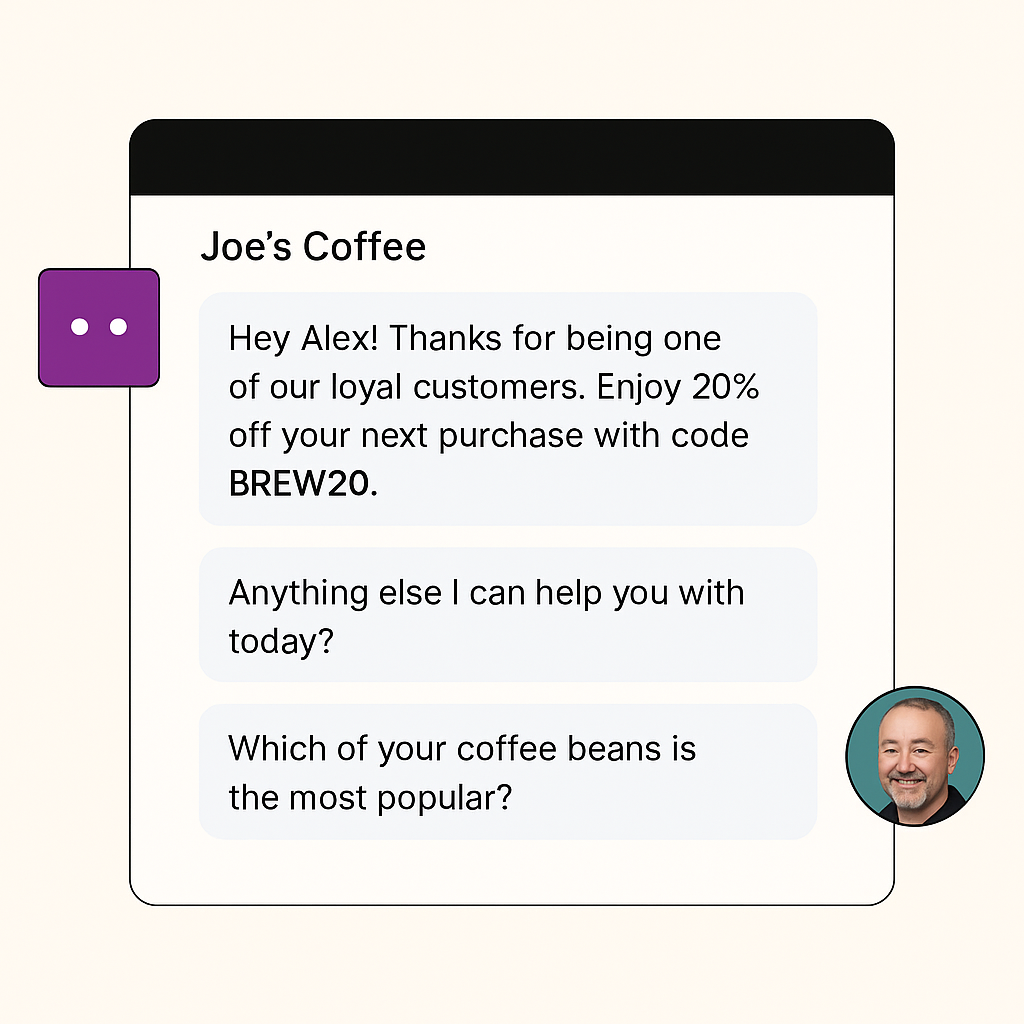
That camera the customer is tracking? It might have earned them enough points to qualify for a discount on their next order. The customer might place that next order right then and there.
Referral prompts
Customers today tend to trust the recommendations of family and friends, which makes referral programs profitable for many merchants. And according to 2024 research from Harvard Business Review, "referred customers not only buy more but also refer 30–57% more new customers than others."
Include product referral links in your WISMO communications, and incentivize conversions with a message like, "If your friend buys, you both get $10."
But be careful not to overload the WISMO communication with incremental-revenue plays. If you have the capacity to run the three suggestions above, test them one at a time to see which one drives the most conversions. When doing so, be sure that the WISMO communications comply with legal regulations, which may include specific requirements around the inclusion of marketing content.
Best channel-specific WISMO practices
Your customers will use their preferred communication channels to make WISMO queries, and you must be ready to meet them on the other side.
Shopify president Harley Finkelstein puts it this way: "The old world was about being everywhere; the new world is about being exactly where your customer needs you, exactly when they need you, in a way that feels completely organic."
Master WISMO across email, chatbot, and SMS with these best practices.
#1: Handling WISMO via email
AI-powered ecommerce chatbots are on the ascent, but many consumers still prefer using email for WISMO and other support requests.
In his 2025 survey of 2,119 US adults, customer service/experience expert Shep Hyken noted that 43% of respondents chose email as one of their three preferred channels for contacting customer support.
Here's how to meet customer expectations in WISMO-related email exchanges.
Include the order number in the subject line
Whichever subject line a customer uses in their WISMO email, respond with an email containing the order number in the subject line: "Update on Order 12345."
Use symbols like "#" sparingly, if at all, to decrease spam risk. You'll boost open rates, which in turn boosts your domain reputation among ESPs.
Keep it simple
Get right to the point in the email's body. Place the tracking link or "Track Package" button as close to the top of the email as possible.
Add a human tone
Acknowledge in a human tone the anticipation and potential frustration behind a WISMO email. You'll both humanize your brand and potentially defuse some of that frustration.
For example, right above the tracking link or button, place a brief line: "We know waiting is hard. Here's the latest on your order."
Also add a human touch to the order tracking page containing real-time carrier-status updates: "Your mountain bike is crossing Colorado!"
Pro tip: Complete the WISMO customer journey by including product care tips, return links, and review requests in your delivery-confirmation email. You'll preemptively answer common questions and gather valuable user-generated content.
#2: WISMO via chatbots
Ecommerce chatbots enable customer self-service, which many online shoppers increasingly demand.
While most customers prefer phone calls to support teams, Shep Hyken's study revealed that "34% of customers stopped doing business with a company" because they lacked self-service options.
Optimize your chatbot for WISMO-related self-service by following these guidelines.
Pre-load a WISMO button
Save customers the effort of typing in "Where's my order?" and pre-load a button they can tap for access to your tracking portal.
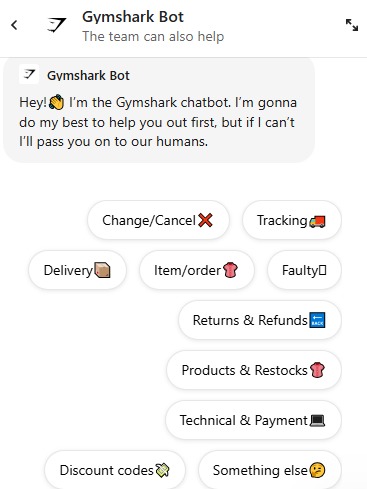
Since WISMO queries are so common, place the tracking button as close to the top of your button menu as possible.
Use natural-language variants
If you use an AI-powered chatbot trained on LLMs, make sure it can recognize variations of the same request. For example, queries like "Where's my stuff?", "Package status?", and "Track order" should all open your tracking portal.
Include helpful FAQ links
Whether a package hasn't shipped yet or is out for delivery, include shipping-related FAQ links after displaying the order's status. The FAQs should at least answer these common questions:
- "What if I miss the courier?"
- "What if my item arrives damaged?"
- "What if my package gets stolen?"
- "What is your return policy?"
Gracefully escalate chatbot sessions to live agents
If the customer can't resolve their WISMO query after two chatbot prompts or uses words that indicate frustration, flip to live chat. Examples of these words might be, "annoyed," "irritated," "exasperated," "disappointed," or "bothered."
The live agent should have full access to the preceding chatbot interaction. Besides having more context to help the customer, the agent can escalate any chatbot training lapses to your development team.
Pro tip: Integrate your CRM with your chatbot software provider. Now the chatbot can treat customers differently based on how you've tagged them in the CRM. For example, VIP customers whose orders have been delayed can be routed to live agents immediately. The agent can apologize and perhaps offer a discount on their next order.
#3: Handling WISMO via SMS
SMS opt-ins are a huge win for online retailers, since SMS sees some of the highest customer engagement among marketing channels. According to Nate Frick, former Enterprise Strategy Director at Marigold, "SMS open rates often surpass 80%" and "messages sent by brands are usually opened within three minutes of delivery."
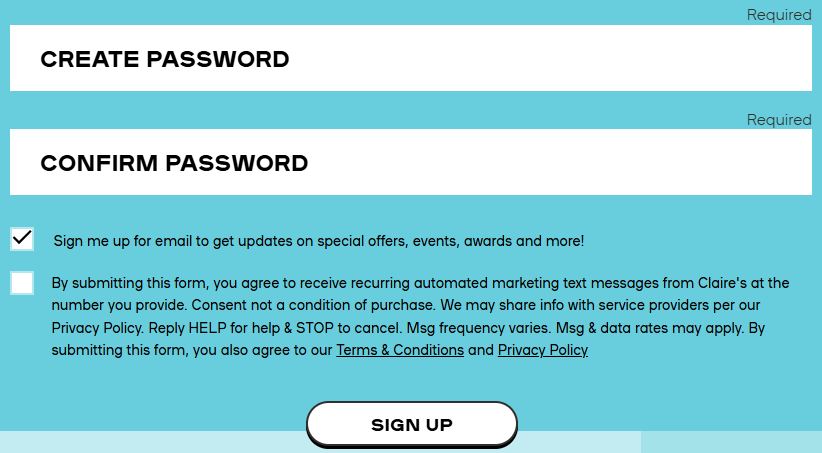
Step one is requiring shoppers to opt in to SMS before you let them use that channel for WISMO requests. From there, nail the SMS WISMO experience using these tips, and most shoppers will want to keep receiving your messages via SMS as well as email.
Enable SMS automations.
Similar to a chatbot, SMS automations allow shoppers to enter a variety of WISMO-related keywords and receive the same WISMO response.
For example, customers who enter “order status,” “package status,” or “shipment status” often want the same information. Klaviyo’s SMS automations let you program “several trigger keywords for a single automation,” so all three customers would get the tracking link.
Set clear expectations.
When it comes to receiving SMS notifications from a brand, customers prefer timely messages related to their orders over other types of texts like sales and promotions or birthday greetings. In its 2023 State of SMS Marketing survey, Validity reported 52% of respondents prefer “shipping notifications” via SMS over any other type of brand text.
But when a shopper makes a WISMO request via SMS, they’re not giving you permission to send as many messages as you want or agreeing to receive marketing messages.
Set clear expectations about messaging type and frequency in your response to the initial SMS WISMO request. For example, when you provide the shipping update, you can include language like, “Get order updates by text (2 to 4 per order).”
Make SMS opt-outs and opt-ins easy and compliant.
Even though a majority of shoppers prefer SMS shipping and delivery notifications, you must obtain consent before sending messages.
Make it easy for shoppers to opt-in at checkout. If you also want to send SMS marketing messages unrelated to shipping, clearly state your intent in the language accompanying the opt-in feature. Opt-outs should also be effortless. For example, include a prompt like “Reply STOP to opt out” in all SMS messages.
Keep in mind that SMS privacy rules vary from country to country. They can also vary by US state. For example, Oklahoma limits marketers “to 3 attempts to contact a recipient (via call or text) within a 24-hour period.”
Compliance failures can result in severe fines, so make sure that your team consults with legal counsel about applicable laws and regulations when configuring SMS messages to customers.
Keep text messages short and actionable.
SMS provider TextUs analyzed its clients’ SMS messages and learned that those under 100 characters had a customer response rate two to five times higher than longer messages.
Short messages can still be actionable and helpful. For example, when a package is about to arrive, something like this 89-character message can be ultra effective: “Heads up! Order #12345 is arriving tomorrow (Thu). Track: {link} – Reply STOP to opt out.”
Soft-sell after delivery.
Because every character in an SMS message is precious, hold off on cross-selling or upselling until the package arrives.
Two days after delivery, if the customer has consented to SMS marketing messages, your follow-up SMS can be something like, “How are you liking your new sneakers? Rate them 1-5, and get 10% off your next order.”
Send messages at reasonable hours.
A loud SMS notification at 2 am is sure to annoy your customers.
SMS provider Attentive lets you schedule messages according to customers’ time zones. Once set up, a good rule of thumb is to send messages between 9 am and 8 pm.
Integrate your SMS platform with your support desk.
Say a shopper uses phrases like “lost” or “not delivered” in the interaction, or they can’t resolve their WISMO request in two exchanges. The next SMS message could include a phone number that connects the customer with a live agent.
Sync your SMS platform with your support desk, and the answering live agent can view the message history. Now the potentially upset customer won’t need to explain the situation a second time.
Technology stack essentials to win at WISMO
A WISMO experience that fosters customer loyalty depends on an integrated tech stack with specific capabilities. Here are the essentials.
Branded tracking page
When shoppers use SMS, email, or a chatbot to check their order status, the ideal experience is directing them to a tracking page that mimics your ecommerce storefront. Customers will assume they haven’t left your site, and they’ll credit you with the seamless WISMO exchange.
Extend Tracking allows you to customize your tracking pages so they maintain the integrity of your brand while feeling personalized for every customer.
Help desk integration
Your help desk is your WISMO nerve center. The best types of help desks store WISMO interactions from multiple channels and trigger responses from live agents when those interactions meet certain conditions.
Major ecommerce help-desk players like Gorgias, Zendesk, and Gladly integrate with top email and SMS service providers, as well as leading ecommerce platforms like Shopify or BigCommerce.
Gladly, for example, doubles as a help desk and chatbot provider. And because of its Shopify integration, outgoing Gladly communications can contain links to complementary products that may interest customers making WISMO queries.
Sentiment analysis capability
Choose your help desk carefully. Besides the ability to integrate with the systems mentioned above, some are also able to detect the sentiment behind WISMO and other requests.
As mentioned earlier, if the request contains words indicating anger or frustration, the customer can immediately be routed to a live agent.
Gladly, for example, conducts sentiment analysis with the help of AI agent SentiSum. With this integration, Gladly can automatically analyze all channels connected to it, including voice calls, emails, chats, and social media. It then prioritizes conversations “based on urgency, risk, and sentiment” and sends the most urgent or risky to live agents. Of course, make sure you consult with counsel about any legal requirements that might apply.
Shopper Operations by Extend
Suppose a customer lands on your branded tracking page, enters their order number or email address, and learns their package was delivered yesterday. Then they open your chatbot and claim their package wasn't delivered, which means it was likely stolen or lost.
This is where a unified platform like Extend Shopper Operations changes the equation. Shopper Operations brings together delivery solutions (order tracking, shipping protection, automated claim resolution), returns and exchanges, and product protection under one roof. And thanks to an AI-powered layer called Shopper Intelligence, you can personalize every customer’s experience based on lifetime value and risk.
Shopper Intelligence analyzes each customer's behavior, purchase history, and risk profile in real time. It then applies a personalized policy. A loyal customer who's made 50 purchases, tracks their order, and files a lost-package claim? They get a fast, frictionless resolution, often within seconds. But a first-time buyer flagged for policy abuse? They get a different experience entirely, protecting your margins without penalizing your best shoppers.
Shipping protection, a core Extend product feature folded into the Shopper Operations ecosystem, further reduces WISMO anxiety. Customers can purchase coverage at checkout for a fraction of the item's price. If a package is lost, stolen, or damaged, they can file a claim online. Most receive a decision within seconds. No loyalty-killing back-and-forth required.
CSAT survey aggregator
The best way to confirm that WISMO boosts customer satisfaction is by attaching a CSAT survey to the end of every WISMO interaction.
Simply ask, “How satisfied are you with the service you received?”, followed by a scale of one (least satisfied) to five (most satisfied) or five increasingly happy-looking emojis.
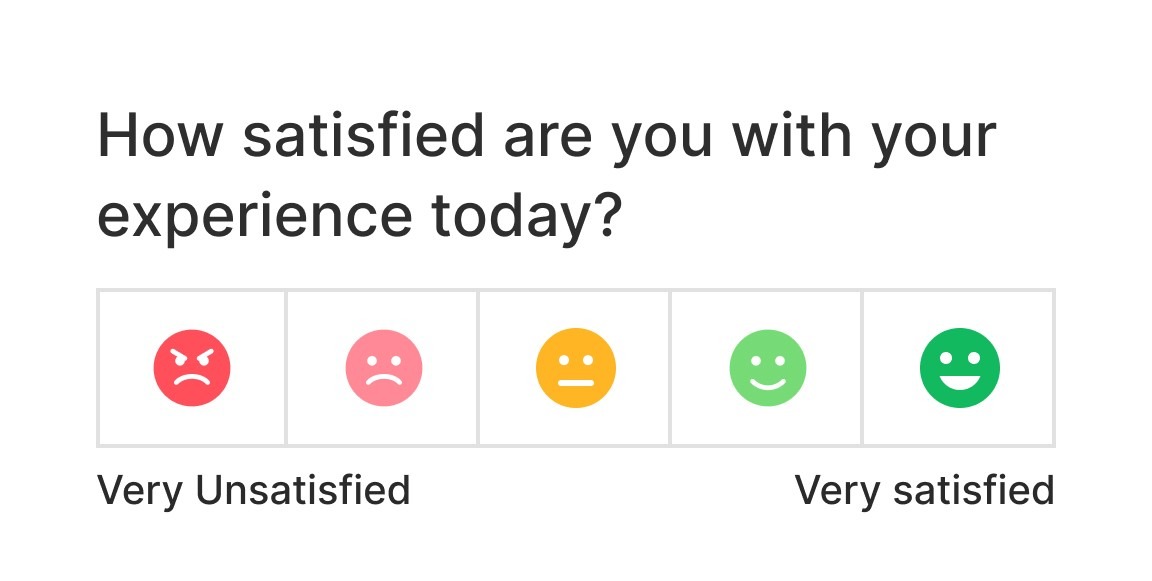
Help desks like Gorgias can append a CSAT survey to any supported customer communication.
Turn WISMO into a loyalty driver with Extend Shopper Operations
To sum it all up: there’s no need to fear WISMO. Instead, welcome it, optimize it, and watch it become a loyalty driver for your online store.
Shopper Operations by Extend is now a crucial partner in this process. You get a single system to handle order tracking, shipping protection, claim automation, and returns. WISMO is often the “gateway” experience that moves shoppers toward other Shopper Operations-provided experiences like returns management.
With the included Shopper Intelligence layer, the customer moving from WISMO to the return will get the experience best suited to their history. Shopper Intelligence’s AI-powered customer segmentation rewards your best shoppers and filters out bad actors.
You get peace of mind from knowing the process was seamless, your best customers stay happy, and your bottom line has taken no hit.
To learn more about how Extend Shopper Operations can turn WISMO and the rest of the post-purchase experience into a loyalty driver, schedule a free demo here.

Aaron Sullivan is content and copy director at Extend. He specializes in writing about e-commerce, finance, entertainment, and B2B SaaS.